Louis Vuitton x Singer: When the Art of Travel Meets the Porsche 911
Since its founding in 1854, Louis Vuitton has maintained a close relationship with travel and the various forms of transportation that accompany it. From the first automobile trunks created at the end of the 19th century to bespoke luggage designed for exceptional cars, the Maison has regularly brought its craftsmanship into the automotive world.
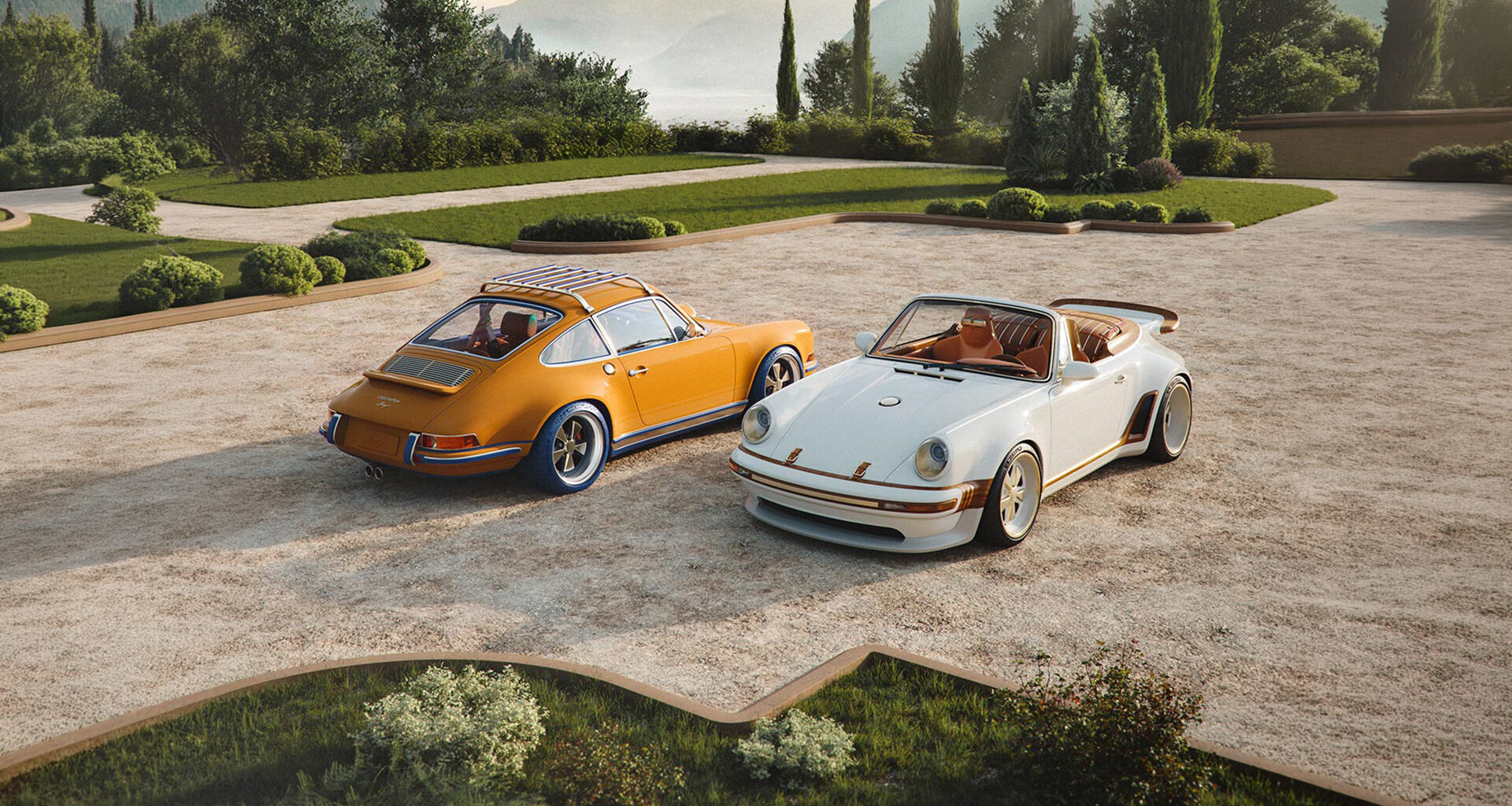
This history now enters a new chapter with Singer, the California-based specialist renowned for its reinterpretations of classic Porsche 911s. Together, the two houses unveil two unique automobiles: a Porsche 911 Reimagined by Singer – Classic and a convertible Porsche 911 Reimagined by Singer – Classic Turbo, envisioned by Nicolas Ghesquière.
More than a simple aesthetic collaboration, the project marks a first for both houses. Louis Vuitton presents its first co-branded automotive creation, applying its expertise in leather goods, trunk-making and watchmaking to the Porsche 911.
A Collaboration Born from Watchmaking
The project originally had a much more focused objective. Louis Vuitton was initially commissioned to create a dashboard clock for a Porsche 911 reimagined by Singer.
Developed by La Fabrique du Temps Louis Vuitton in Switzerland, this removable mechanical timepiece draws inspiration from the Tambour watch. Once removed from the car, it can also be used as a desk clock.
However, integrating it into the interior quickly raised questions of visual consistency. To complement the creation, Louis Vuitton and Singer decided to extend their work to the other dashboard instruments. The speedometer, tachometer, gauges, hands and indices were therefore completely redesigned around the graphic codes of the Tambour collection.
This work alone required a year of development and ultimately gave the project an entirely new dimension. Upholstery, controls, materials, luggage and accessories: gradually, the entire car became a showcase for Louis Vuitton’s different areas of expertise.
©Louis Vuitton/Singer Vehicle Design
A Porsche 911 Designed Around the Art of Travel
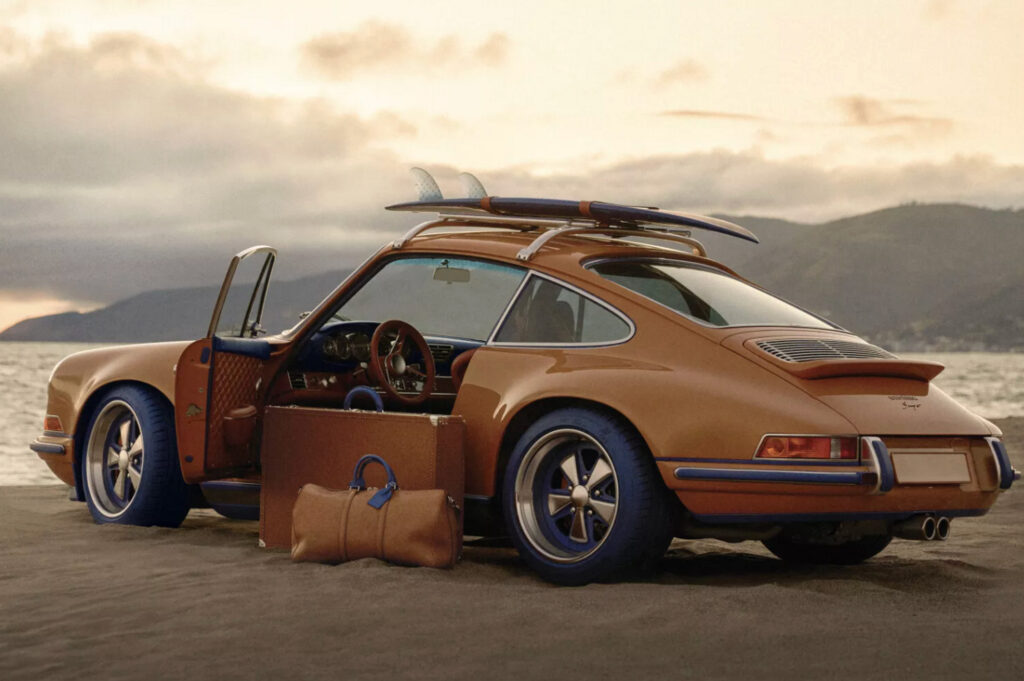
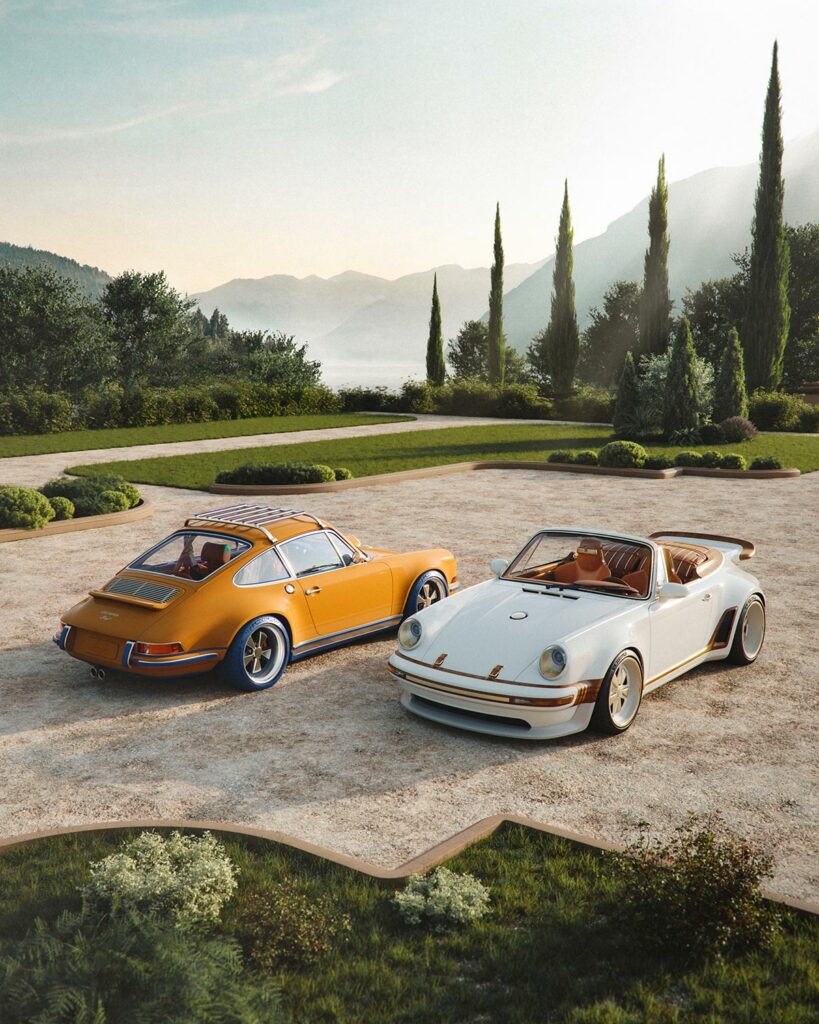
The first creation to emerge from this collaboration is a Porsche 911 Reimagined by Singer – Classic, immediately recognizable by its combination of saffron, cobalt blue and yellow.
The choice of colors establishes a dialogue between the two houses. Present in Louis Vuitton’s archives for more than a century, saffron notably recalls the travel trunks created for Citroën in 1924. For Singer, the shade also evokes the Bahama Yellow associated with some of the California workshop’s earliest creations.
Inside, natural leather takes center stage. The seats, door panels and various interior elements incorporate techniques and references drawn from Louis Vuitton’s leather craftsmanship. The diamond pattern on the seats notably evokes the malletage found inside the Maison’s trunks, while Monogram flowers appear more discreetly across various elements.
Even components usually made from plastic have received special attention. Adjustment knobs, controls, locks and air vents are made from metal and individually hand-finished using techniques similar to those found in fine watchmaking.
The Art of Travel also extends to the exterior. A specially developed luggage rack can accommodate a Louis Vuitton trunk, a surfboard or even a pair of skis. The Porsche 911 is therefore envisioned not simply as a collector’s object, but as a car designed to genuinely take to the road.
Luggage Designed as an Extension of the Car
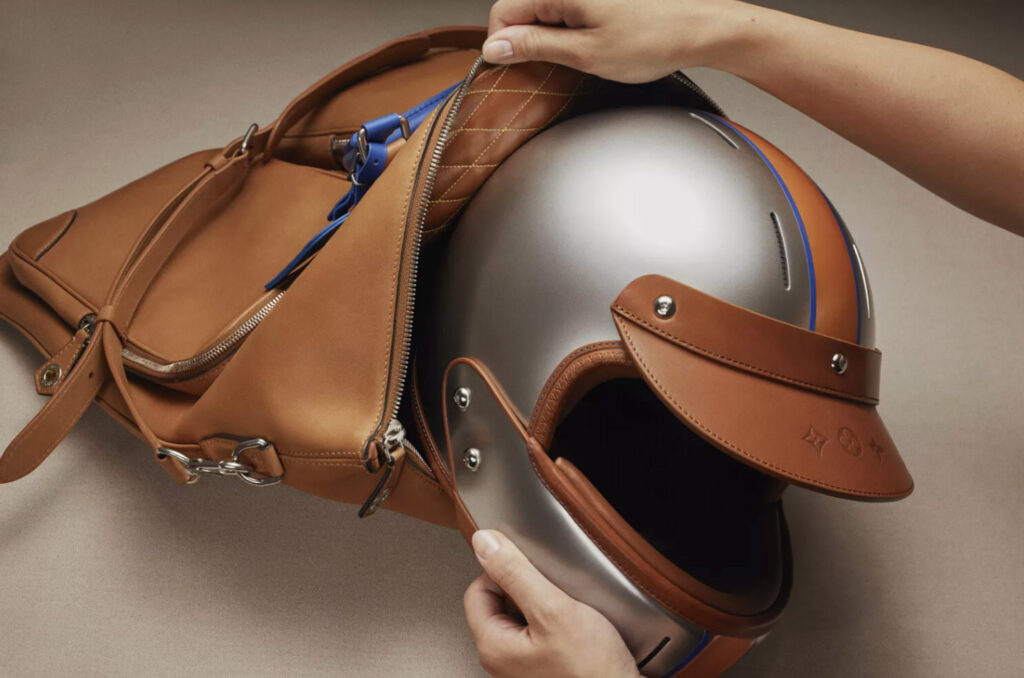
Louis Vuitton accompanies the first Porsche with a complete collection developed specifically for travel. Rather than creating simple matching accessories, the Maison conceived them as a direct extension of the automobile.
The luggage has therefore been tailored to the dimensions of the 911. The Keepall, Bisten suitcase and specially designed bags intended for the front luggage compartment feature the same materials and colors used throughout the interior.
A Louis Vuitton surfboard, crafted from blond oak and walnut with Monogram marquetry, can also be carried on the roof. A pair of skis manufactured in the French Alps completes the collection.
This approach directly reconnects with Louis Vuitton’s history. As early as the late 19th century, the Maison was already developing trunks adapted to the first automobiles, followed by accessories specifically designed for long-distance car travel. More than a century later, the collaboration with Singer offers a contemporary interpretation of this heritage.
©Louis Vuitton/Singer Vehicle Design
A Second Porsche Envisioned by Nicolas Ghesquière
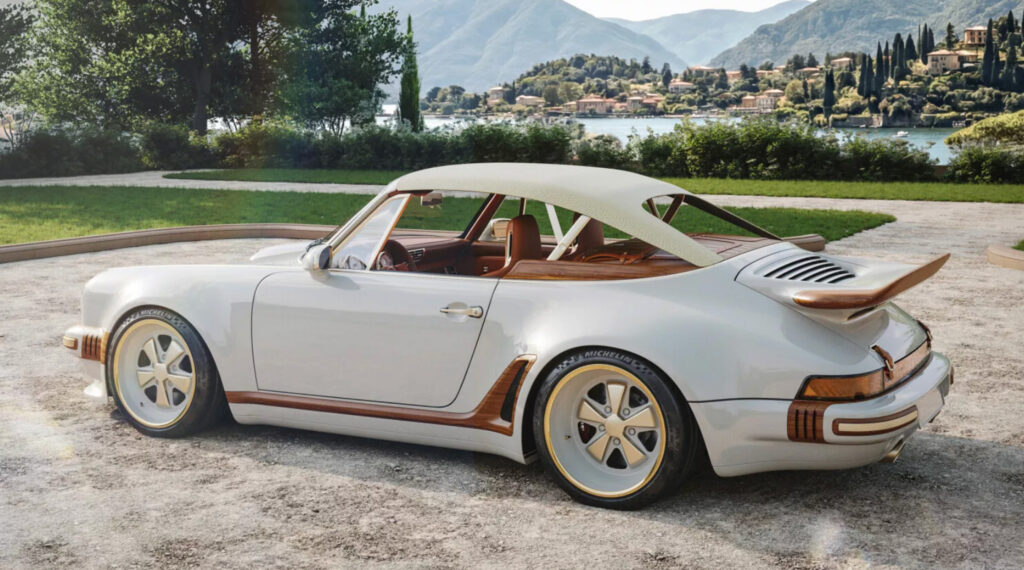
The collaboration does not end with the first 911. A second automobile takes the form of a Porsche 911 Reimagined by Singer – Classic Turbo, this time envisioned under the direction of Nicolas Ghesquière, Artistic Director of Louis Vuitton’s Women’s Collections.
The approach is markedly different. This convertible version features an ivory-white body inspired by Lutetian limestone, the pale stone characteristic of the Parisian landscape, combined with gold accents, natural leather and numerous wooden elements.
Here, Nicolas Ghesquière imagines a meeting between the automotive and nautical worlds. The use of wood notably references classic boats, an inspiration particularly visible in the luggage compartment behind the seats. Crafted from varnished wood using techniques reminiscent of classic runabout decks, it houses bespoke Louis Vuitton luggage designed to perfectly follow the contours of the car.
Wood also appears throughout other areas of the automobile, while the dashboard clock now occupies a central position on the console. The dialogue between watchmaking, automotive design, leather craftsmanship and design continues down to the smallest components.
As with the first 911, Louis Vuitton accompanies the car with a dedicated collection including luggage, accessories and pieces designed for the driver. A Tambour Automatic watch in ceramic and yellow gold notably extends the work carried out around the dashboard timepiece.
Louis Vuitton and Singer: Two Visions of Craftsmanship
The collaboration feels particularly natural because the two houses share a similar approach to personalization and craftsmanship.
Founded in California in 2009, Singer has become renowned for working with owners of classic Porsche 911s to restore and reinterpret their cars according to highly detailed specifications. Each project combines engineering, craftsmanship and aesthetic research while preserving the character of the original 911.
Louis Vuitton, meanwhile, brings more than 170 years of history connected to travel, alongside the expertise of several of its métiers. Trunk-makers, leather artisans, designers, fashion teams and watchmakers from La Fabrique du Temps all contributed to the development of these two cars.
The collaboration therefore goes far beyond a simple exercise in style. With these two Porsche 911s reimagined by Singer, Louis Vuitton brings its Art of Travel into the automotive world, reconnecting in a resolutely contemporary form with a story that began on the road more than a century ago.